Investment Strategy
Is NSC Still a Good Investment? Pros and Cons
Dec 10, 2025
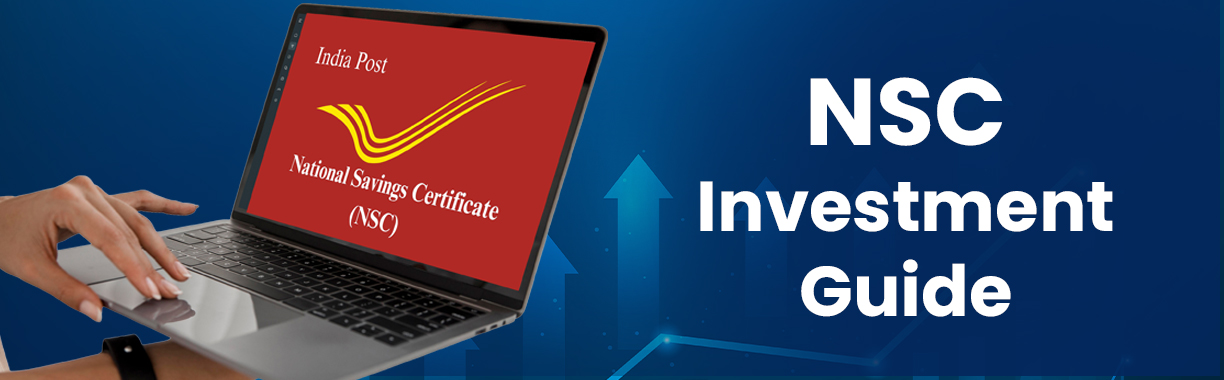
The national savings certificate (NSC) has long been considered one of India's traditional small-savings options. Backed by the Government of India, it is known for its simple structure, predictable returns and suitability for conservative savers. But with changing interest rate cycles, evolving financial products and rising financial awareness, many people wonder: Is NSC still relevant today?
This blog breaks down the pros and cons of the national savings certificate to help you understand whether it fits your long-term financial approach.
What Is NSC?
The national savings certificate is a fixed-income instrument offered through post offices. It has a fixed tenure of 5 years, and interest is compounded annually. It is often chosen by individuals who prefer low-risk investments and want to build disciplined savings over time. For those exploring NSC scheme details, key features include a five-year lock-in period, guaranteed returns and eligibility for certain tax deductions as per prevailing guidelines.
Example:
If you put ₹30,000 into the national savings certificate, the amount grows every year at a fixed rate. You cannot withdraw it before five years (except in limited permitted scenarios), making it suitable for people who want committed savings.
Pros of Investing in NSC
1. Government-Backed Safety
One advantage of the national savings certificate is that it carries sovereign backing. This makes it appealing for risk-averse savers who prioritise capital protection.
2. Predictable Returns
The NSC interest rate is announced by the government every quarter. Once you invest, your rate stays fixed until maturity. This helps in planning your future cash flows without having to worry about market volatility.
3. Tax-Efficient Savings
Individuals can claim NSC tax benefits under Section 80C of the Income Tax Act, 1961, though it is subject to applicable limits and conditions. Additionally, the interest earned each year is treated as reinvested, making it count towards the 80C limit for subsequent years.
4. Easy to Start and Manage
Investing in a national savings certificate does not require complex paperwork or extensive financial knowledge. It is issued at post offices and can now be managed digitally in many cases.
5. Ideal for Long-Term Discipline
People who struggle to remain consistent with savings often find NSC helpful. There is a lock-in period that ensures that the funds stay untouched, allowing your capital to grow steadily while compounding annually.
Cons of Investing in NSC
1. Limited Liquidity
The five-year lock-in can be restricting for those who prefer flexible savings. Early withdrawals of funds are only possible under exceptional circumstances.
2. Interest Is Fully Taxable
Although the investment qualifies for certain deductions, the maturity amount is taxable as per your tax slab. This may reduce the post-tax return for those who are individuals in the higher tax brackets.
3. Returns May Not Beat Inflation
One more drawback of the national savings certificate is that its returns do not always keep up with rising inflation. For those who are in it for long-term wealth creation, they prefer options that have growth potential linked to the broader market.
4. Not Suitable for All Financial Goals
If someone is saving for short-term goals or needs flexible access to funds, NSC may not be the ideal choice. It is better suited for those with a steady income and long-term savings preferences.
Is NSC Still a Good Investment Today?
Whether the national savings certificate suits you depend entirely on your personal financial goals, safety preference and time horizon.
People looking for stable, government-backed, low-risk instruments often find NSC suitable. However, individuals with long-term growth-oriented goals may consider combining NSC with other regulated financial products to balance stability with potential appreciation. Some savers also explore NSC in comparison to fixed deposits or recurring deposits. While the structure differs, the core question is whether NSC is a good investment. It depends largely on whether predictable returns and disciplined savings outweigh flexibility and growth potential for you.
Using NSC investment as part of a diversified approach may work well for individuals who want security and steady accumulation.
Conclusion
The National Savings Certificate remains a trusted savings instrument, particularly for those who value safety, fixed returns and tax efficiency. While it is not suitable for every financial requirement, it continues to hold relevance in many long-term savings plans. Before you decide to invest in the NSC, individuals should assess their liquidity needs, tax bracket and future goals.
If you are exploring different saving and investing approaches and want guidance while evaluating regulated financial products, you can learn more through Indiabulls Securities Limited (formerly Dhani Stock Limited), which offers tools and resources to help you understand the markets better and make informed decisions.
FAQs
1. Can NRIs buy the National Savings Certificate?
As per current rules, NRIs cannot make fresh NSC purchases, though certificates purchased before a change in residency status may be allowed to run until maturity.
2. What happens if I lose my NSC certificate?
Duplicate certificates can be issued after verification and following the required process at the respective post office.
3. Can NSC be used as collateral for loans?
Yes, NSC can be pledged as security with certain institutions, depending on their policies and documentation requirements.
4. How is NSC different from KVP?
While both are post office savings instruments, they differ in tenure, interest structure and the time it takes for the investment to double.
Disclaimer: The contents herein are only for information and do not amount to an offer, invitation or solicitation to buy or sell securities or any other financial product offered by Indiabulls Securities Limited (formerly Dhani Stocks Limited / DSL). The content mentioned herein is subject to updation, completion, amendment without notice and is not intended for distribution to, or use by, any person in any jurisdiction where such distribution or use would be contrary to law or would subject Indiabulls Securities Ltd. (formerly Dhani Stocks Ltd. / DSL) to any licensing or registration requirements. No content mentioned herein is intended to constitute any investment advice or opinion. ISL disclaims any liability with respect to accuracy of information or any error or omission or any loss or damage incurred by anyone in reliance on the contents herein. This blog is based on information obtained from public sources and sources believed to be reliable, but no independent verification has been made about its accuracy or its completeness is guaranteed. This content mentioned in this blog is solely for informational purpose and shall not be used and/or considered as an offer or invitation or solicitation to buy or sell securities or other financial instruments. ISL will not treat recipients as customers by virtue of their receiving this report. The securities / Mutual Fund units (if any) discussed and opinions expressed in this blog/report may not be suitable for all investors. Such investors must make their own investment decisions, based on their investment objectives, financial positions and specific needs. ISL accepts no liabilities whatsoever for any loss or damage of any kind arising out of the use of this report. Past performance is not necessarily a guide to future performance. Investors are advised to see Risk Disclosure Document to understand the risks associated before investing in the securities markets. ISL may have issued other blogs that are inconsistent with and reach different conclusion from the information presented in this blog.
Indiabulls Securities Limited (formerly Dhani Stocks Limited) is a Mutual Fund Distributor registered with ‘Association of Mutual Fund of India’ (AMFI) vide ARN number ARN-160411. Corporate Identification Number: U74999DL2003PLC122874; Registered office address: A-2, First Floor, Kirti Nagar, New Delhi - 110008. Tel.: 011-41052775, Fax: 011-42137986.; Correspondence office address: Plot no. 108, 5th Floor, IT Park, Udyog Vihar, Phase - I, Gurugram - 122016, Haryana. Tel: 022-61446300. Email: helpdesk@indiabulls.com